

Hugo Marques
Hairstylist
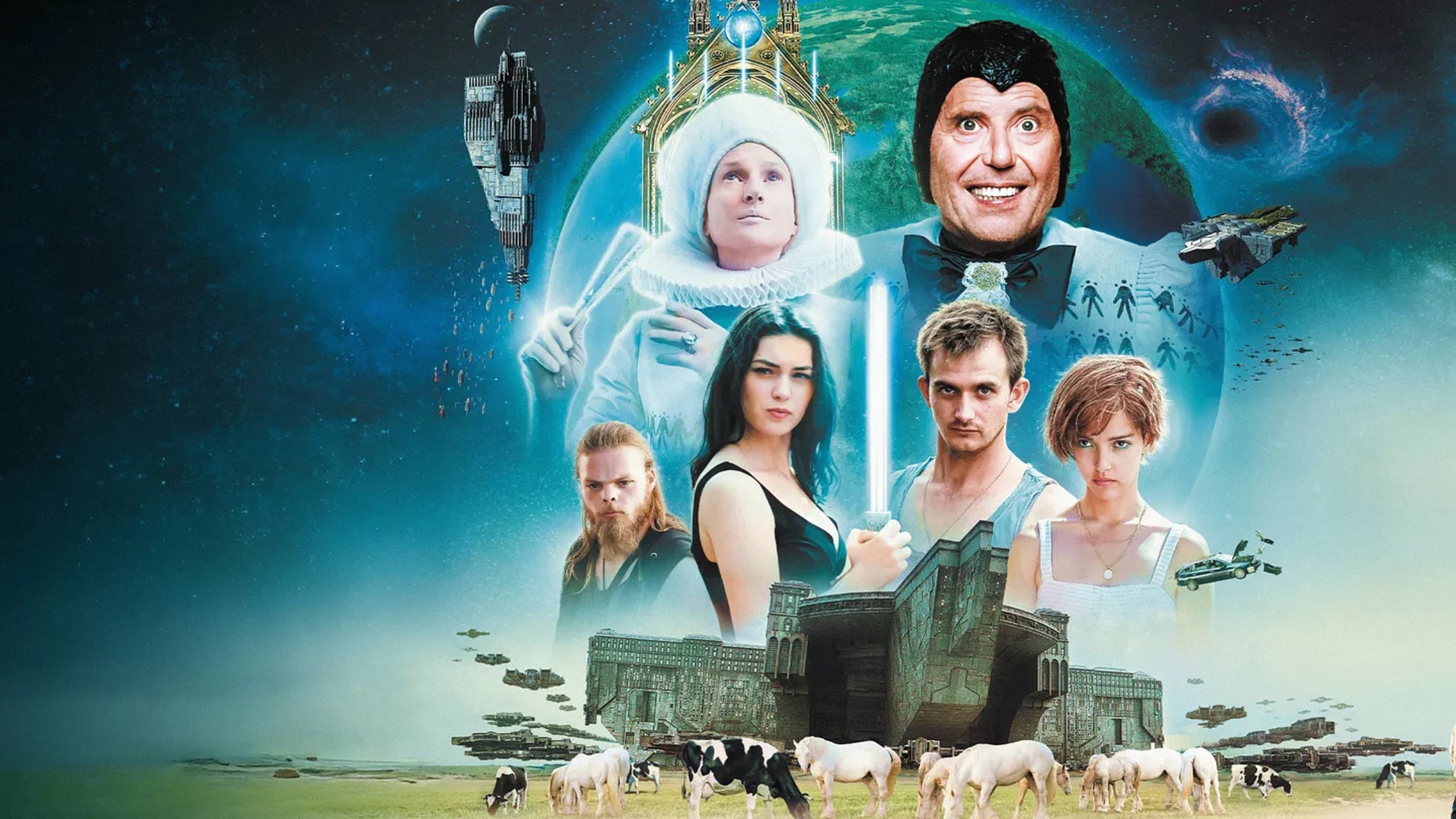

In a quiet fishing village on northern France's Opal Coast, the birth of a peculiar child sparks a hidden war between extraterrestrial forces of good and evil.
Hugo Marques
Hairstylist
Hugo Vieira
Grip
Tanguy Delhez
Gaffer
Ricardo Giglio
Electrician
Oscar Kurkjian
Second Assistant Camera
Soraia Rego
First Assistant Camera
André Rosado
Digital Imaging Technician
Mario Soares
Gaffer

Lyna Khoudri
Line

Anamaria Vartolomei
Jane

Camille Cottin
La Reine

Fabrice Luchini
Belzébuth

Brandon Vlieghe
Jony
Julien Manier
Rudy

Bernard Pruvost
Van der Weyden
Philippe Jore
Carpentier
Annie Tardivon
Mère de Jony
Marie Vasez
Lou
Cédric Fortin
Roland Deroo
Annick Lefevre
Gisèle, mère de Rudy
Tony Devanne
Ami Rudy #1 éberlué
Giovanny Dupetit
Ami Rudy #2 (en larmes)
Giovanni Boutillier
Ami Rudy #3 (malin)
Olivier Delattaignant
Gros baigneur décapité
Bruno Darras
Gendarme #1
Gino Evrard
Gendarme #2
Brent Marchant
5/15/2025
When a film seeks to tackle such distinctive comedic forms as parody, satire or slapstick, the creators first need to make sure that what they’re hatching truly works. But, in the case of this latest offering from storied auteur Bruno Dumont, the mark is missed by a wide margin. This alleged take-off on classic space operas like the original “Star Wars” trilogy or “Spaceballs” (1987) simply doesn’t cut it, primarily because it just isn’t funny. Perhaps that’s due to the fact that the filmmaker doesn’t seem to be clear on the direction he wants the story to take or the tone with which it’s presented. In a nutshell, two alien species – the Ones (champions of good) and Zeroes (disciples of evil) – have been exiled to Earth (why and by whom is never made clear), where they’re battling one another to win over the control of humanity through their ground zero strongholds in a small French coastal fishing village. But, in telling this tale, Dumont’s paper-thin narrative meanders aimlessly, blending a bland mixture of lame humor (most of which falls positively flat), bombastic but innately shallow soliloquies on the nature of good and evil, unexplained Monty Python-esque absurdist imagery, and gratuitous sexual encounters that appear to be thrown in for little more than titillating filler. To its credit, the picture effectively employs some truly impressive special effects, an eclectic background score based largely on reworked neo-classical arrangements of the compositions of J.S. Bach and Henry Purcell, and a production design that incorporates set designs drawn from Gothic and Renaissance European architecture. It also features a wealth of stunningly gorgeous cinematography, although a number of overlong shots (particularly many inexplicably filmed from too great a distance) could benefit from judicious pruning. So what exactly is the director going for here? Damned if I know. If it’s satire, its symbology is seriously undercooked. If it’s a campy romp, it’s too understated. If it’s screwball comedy, the pacing is too sluggish. And if it’s insightful social commentary, it’s too superficial and doesn’t take itself seriously enough. In essence, “The Empire” may offer some segments that are nice to look at, but that’s about all, considering that the bulk of this release, in the end, really has nothing interesting, meaningful or piquant to say.